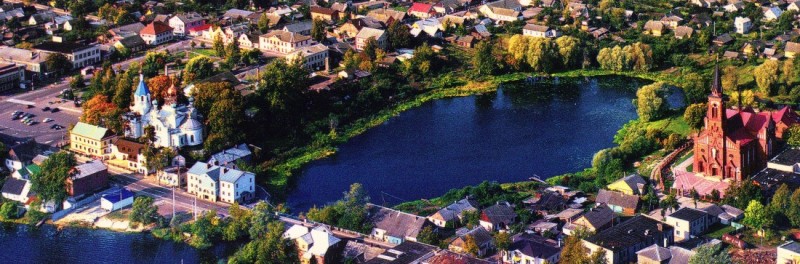

The article explains the existence of separate Eastern Slavic civilization in the modern European territories of Belarus and Ukraine. Slavs, migrated in Eastern Europe in 5-9 centuries BC, under the influence of various factors separated and formed two civilizations – Eastern Slavic (Belarusian-Ukrainian) civilization, and Eurasian civilization. The disengagement of the Eastern Slavs was determined by the characteristics of their tribes, the natural conditions of the Eastern European plain and the Eurasian steppes, assimilation with local tribes, the internecine wars between the lands and kingdoms, the influence of the Mongol Empire, the emergence of the Grand Duchy of Lithuania as the unifier of the Eastern Slavs. In the development and interaction of these civilizations might be observed three periods, ‘dakieuski and kieuski,’ emergence period, and modern period.
It seems that the ethno-national division of the Eastern Slavs began in the 10-11 century regardless of the processes of formation of Kievan Rus’ and even before its collapse. This division took place between the Slavs who lived in what is now Ukraine and Belarus, and Slavs migrated in the North-East District/Edge (territory of the future Muscovy), where the latter mingled during the ‘first wave’ of assimilation with Finno-Ugric Peoples (Mordva, Mari, Ves, Meščera, Muroma). The second wave of assimilation with Turkic peoples for centuries, as during the reign of the Golden Horde and in the later periods, even more separated Muscovy Slavs from the Slavs of modern Belarus and Ukraine. Eurasian culture of Muscovy/Russia is based on mutual understanding, lifestyles, mentalities, traditions and knowledge of Slavic and Finno-Ugric and Turkic peoples. We can assume that Russia, including over the long history of the Eurasian territory and its population, is the successor of the Eurasian movement from east to west. However, many Russians still consider Russia, contrary to the facts, as exclusively Slavic nation, and do not recognize the separate existence of Belarusian and Ukrainian ethnic groups.
In fighting between the principalities of Kievan Rus’ was one of the major factors in its decay, but on the other hand led to a strengthening and separation of existing at the time centers (Principality of Polotsk, Galician-Volyn principality) and create a new feudal formations of future Muscovy (Republic of Novgorod, Rostov-Suzdal principality). Slavs of modern Belarus and Ukraine is largely preserve their identity and civilization within the Grand Duchy of Lithuania (GDL) which actually united the Eastern Slavs after the collapse of Kievan Rus’. Such a unifying role could not perform Muscovy while itself was in vassal depending on the Golden Horde of Mongols.
The Eastern Slavic civilization is nearly three centuries older over the Eurasian, both because of the slow migration of the Slavs on the future lands of Muscovy (as evidenced by a much later formation of Suzdal in comparison to the principalities of Polotsk and Kiev) and due to vassal dependence of Muscovy from the Tatars over 240 years. The population of Belarus and Ukraine exists for almost eight centuries and it is largely ethnically homogeneous and has been residing in the same territory while the Slavs of North-East Edge were assimilated at first with Finno-Ugric tribes, and later with Turkic peoples and expanded its territory dozens of times.The principal difference between two civilizations is observed while calculating the ratio of the Slavs to other ethnic groups and the ratio of Christian believers to the faithful Muslims.
Obviously, the enrollment of Belarus and Ukraine to the orthodox, eastern or Eurasian / Russian civilization (despite a number of characteristic features of Western civilization) is made on the basis of myths and conclusions made as the result of the interpretation of historical facts of view of geopolitics (the myths of the trinity of three Slavic nations, ‘the Great’, ‘Malorosov’ and ‘Belarusians,’ approval of the Slavic character of the Russian Empire, the continuity of the history of Kievan Rus to Russia, a claim for the role of Muscovy in the union of the Eastern Slavs). The development of civilization requires a long time and it is clear that Eastern Slavic European or Belarusian-Ukrainian civilization will take proper and appropriate place in an era of global change in the world through the understanding and co-operation of its constituent parts which still have a lot in common with each other.
Published in Belarusian in web-magazine “SAKAVIK”, #3, September 2013
 КУЛЬТУРА, НАЦЫЯ
Пакінуць каментар